

Passed in 2022, this bill amends the State School Aid Act to provide supplemental appropriations for fiscal year (FY) 2022-23. Specifically, the bill adds $12.2 million in General Fund (GF/GP) money, for a gross supplemental appropriation of $12.2 million. In addition to K-12 funding additions, this bill creates a new scholarship program for high school graduates or those who achieve the high school equivalency certificate and qualify under FAFSA. Scholarship applicants must be Michigan residents for at least one year, be a full-time student, and maintain satisfactory academic progress.
Resource Library
Welcome to the Think College Resource Library
The library includes carefully selected resources on a wide range of topics related to postsecondary education for people with intellectual disability.
Use the filters on the left to narrow your search by topic, and click on Advanced Filters to refine by project, audience, media type, or publication type. If you are having trouble finding the resources you need, please contact us at thinkcollegeTA@umb.edu
Displaying 251 - 260 of 1008

As students and their families look at college options, the question of how to pay for it is on everyone’s mind. No one solution is going to work for all students, so this webinar shares information on several funding options that students and families can explore, such as Vocational Rehabilitation, Medicaid, scholarships, federal student aid, Veteran’s benefits, and ABLE accounts. Details of each funding source are shared, as well as an overview of the conditions under which available funding possibilities may be an option.
Project
National Coordinating Center
Significant advancements resulting from various legislative and grant initiatives have resulted in increases in higher education programs enrolling students with intellectual disability (ID). Information about program practices in admissions, academic access, employment, campus housing, and extracurricular activities was gathered via a national survey and offered to the public via a searchable directory.
College students in general have an immense amount of freedom to take emotional, physical, and intellectual risks. Presenters discussed the access to Dignity of Risk that students with intellectual disability should have when in college. The presenters advocated for increased dignity of risk, a model of dignity of risk in IPSE programming, and five principles that might guide programs as they consider and assess risk.
Project
National Coordinating Center
Passed in 2022, this is the appropriations bill for funding Kentucky state agencies. The bill provides, under the appropriations for University of Kentucky, "$500,000 in each fiscal year for the Human Development Institute (HDI) for the Supported Higher Education Project”. This funds the Kentucky Supported Higher Education Partnership, which works to increase higher education options, access and success for Kentucky students with intellectual and developmental disabilities.
This brief talks about guardianship for people with intellectual and/or developmental disabilities (IDD). It will show you some differences between people with IDD who have guardians and people with IDD who do not have guardians. This brief also describes alternatives to guardianship, including supported decision-making. A list of related resources is included. It also offers questions that youth can ask parents and teachers to learn more about alternatives to guardianship. The brief was published by The Center on Youth Voice, Youth Choice.

This Executive Summary provides a brief overview of the entire Annual Report of the Cohort 3 TPSID Model Demonstration Projects (Year 1, 2020–2021). Information is provided about the TPSID projects about program characteristics, students characteristics, academics, academic supports, employment, vocational rehabilitation, residential services, and program completion and credential attainment.
The full report can be found here.
Project
National Coordinating Center
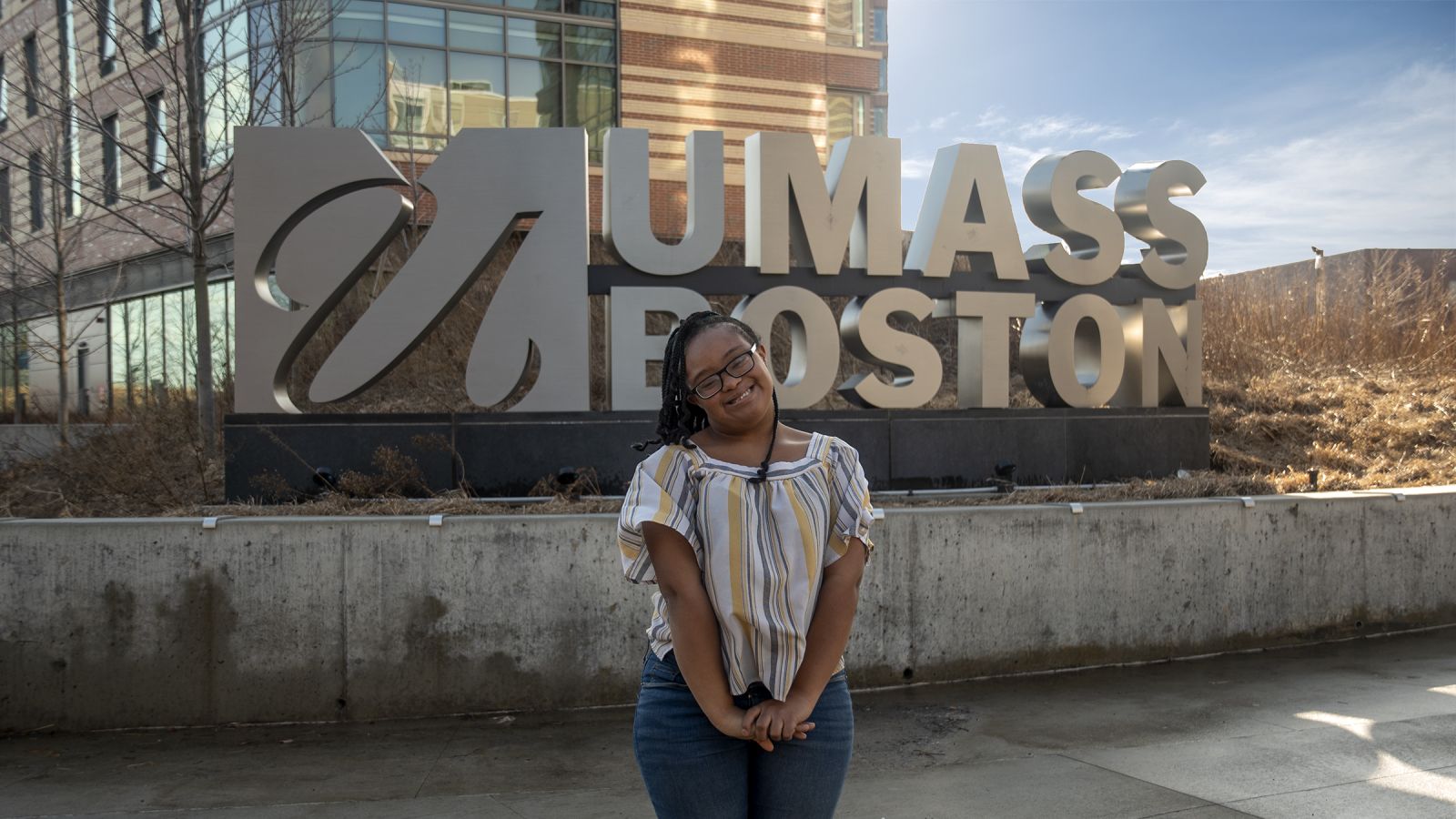
Think College interviewed Nykenge (Nikki) Blue for our April 2022 newsletter. Nikki is a student at the University of Massachusetts Boston.
Project
National Coordinating Center
This document identifies many college expectations for entering college freshmen and what middle and secondary school students with intellectual disability, their teachers, and parents can do to prepare for those expectations. There are three categories of expectations: personal independence, academic engagement, and civic and social engagement.
Project
National Coordinating Center
Having the right team in place to support college students with ID to access and succeed in employment is critical—and complicated. Students may be eligible for employment services from various state and federal entities (e.g., ED, DD, VR, HCBS waiver) and coordinating these with existing program services is critical. So where do you start when trying to optimize the resources available and support the best outcomes? Our presenters will tackle this topic, highlighting the need for individualized planning of employment services and supports for college students with ID.
Project
National Coordinating Center