
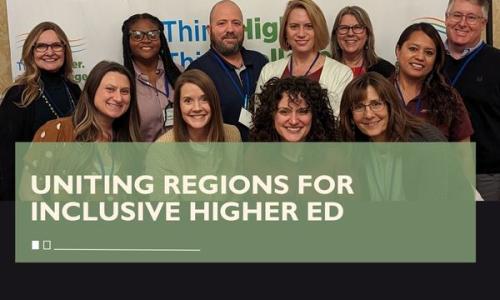
In late October 2023, the Think College Inclusive Higher Education Network organized a pre-conference for regional alliance planning during the State of the Art Conference in Colorado Springs, CO. The event brought together 50 representatives from different regional alliances, fostering collaborative planning for the future. Notably, Think College, Southeast Postsecondary Education Alliance (SEPSEA), and Midwest Inclusive Postsecondary Education Alliance (MIPSA) played a crucial role by providing valuable guidance and support to the planning teams.
Among the regional alliances making strides is the Great Lakes Inclusive Postsecondary Education Alliance (GLIPSEA), covering Indiana, Michigan, Ohio, and Wisconsin. GLIPSEA, now in its second year of implementation, showcased progress and shared insights into the challenges faced during the initial stages of development.
The Northwest Inclusive Postsecondary Education Alliance (NWIPSEA) embarked on its first year of implementation, concentrating on establishing a robust foundation for inclusive higher education within its member states—Idaho, Montana, Oregon, and Washington.
The Red River Higher Education Alliance (RRHEA) in Oklahoma and Texas is diligently working in its formation stage to lay the groundwork for collaboration and communication. Meanwhile, the Northeast Postsecondary Education Alliance (NEPSEA) and the Mid-Atlantic Region, covering various states, are actively engaged in the early planning steps of their formation stages.
In the Upper Midwest Region, including Minnesota, North Dakota, and South Dakota, the alliance is entering its formation stage, with a specific focus on assembling a planning team and bringing key partners together. In the west, both the 4 Corners Region (Arizona, Colorado, New Mexico, & Utah) and the Western States Region (California & Nevada) have entered the exploration stage of regional alliance development. These alliances are working diligently to establish planning teams and assess the feasibility of forming a regional alliance.
This comprehensive article reflects the diverse progress and commitment across different regions, showcasing a collective effort to advance inclusive higher education on a nationwide scale.
As these alliances progress through different stages, their combined efforts contribute to fostering an inclusive and accessible higher education landscape across the nation. For more information on regional alliances, visit Think College's regional alliance website or email Susanna Miller-Raines.