
This fall has been a busy one, with lots of presentations at conferences around the country. You know how it is, you rush to get your presentation ready, pack, and hope you haven’t forgotten your power cord (or hairbrush), and you quickly slip into conference mode. Luckily, the events we attend are awesome and I’m happy to get to meet new folks in our field and reconnect with old friends and colleagues. But usually the travel part of the process—the actual plane ride—isn’t my favorite part.
Not this time.
Last month, as I was coming home from the State of the Art (SOTA) Conference on Inclusive Higher Education in Colorado Springs, CO, I boarded my connecting flight from Chicago to Baltimore. It had a been a LONG travel day, with a 5:30 am drive to the airport on unplowed snow-covered roads, a missing flight crew, and multiple delays leaving us stuck on the tarmac in Colorado for almost 3 hours waiting for plane to be deiced. So, let’s just say I was less than jolly when I started the boarding process on the final leg of my trip home. As I was looking for that elusive aisle seat on the trusty Southwest plane, I made eye contact with a lovely woman who smiled (instead of diverting her eyes like most folks on the plane). She and I did the “is this seat open dance” and I settled myself in, preparing to listen to my audiobook or watch a movie.
It wasn’t until I sat down that I realized my seatmate wasn’t alone. She was traveling with her young daughter who was happily sitting in the window seat watching her iPad with bright pink headphones. She was maybe 5 or 6, with beautiful braids, and a happy smile. And as we did introductions, her mom explained to me she had Down syndrome.
Now this is where I have to tell myself to play it cool.
Just smile and nod, Meg.
Don’t be that person!!
Do not share everything and kitchen sink about Think College.
And I keep it together.
We strike up a nice conversation, learning we both live in Maryland, and we discuss a bit about our lives. She shares about her daughter and herself and her involvement in the Down syndrome community. And then she says something unexpected, that makes my heart burst with happiness.
As we are discussing Maryland education in general, she asks, “Did you know that the University of Maryland has a college program for students with intellectual disabilities?”
Did I know that? Heck yes!
The director at the Terps EXCEED program is a close friend, and we had just done a presentation together the previous day at the SOTA conference.
I love that program.
But that is NOT THE POINT.
The point is, SHE knew about that program.
This wonderful parent of a little girl in kindergarten already knew there was an inclusive college program in her state!!!
And she was already planning that her daughter would go to college.
In KINDERGARTEN.
Ten years ago, I wrote a blog that posed some questions:
What would happen if, from kindergarten through 12th grade, we expected that students with ID would be provided the option of going to college? Not a guarantee, as no student has that, but the option of accessing future desired learning as an adult.
- How would that change what was said at each IEP conference?
- How would that change teachers’ conversations with parents and colleagues about the student’s future prospects?
- How would that change how we engage and partner with colleges and other adult learning providers in our communities?
And now, 10 years later, I am talking with a parent who has made this a reality.
Every interaction she has with educators and all of her daughter’s IEP goals and learning experiences in the next 12 years will be infused with the knowledge and expectation that her child has college options.
My heart was so happy getting to hear her thoughts and questions about what other college options exist around the country. We exchanged contact information, and I have faith our paths will cross again in the near future.
But here’s the bigger takeaway:
This is why we need the “Think Higher, Think College” public awareness campaign. To plant the seed of hope early in minds and hearts of families that college is possible. To let them hear the voices of college students with intellectual disability sharing stories about their college journeys. To hear about the positive impact their children will have on these communities of higher learning. And more than anything, to allow families to dream big for their children about what is possible.
So, as you go about your day today, consider how you might share the campaign with the people in your life. Send an email, post a link on Facebook, share the video on Instagram. It only takes a minute.
You never know, it might just change someone’s life.
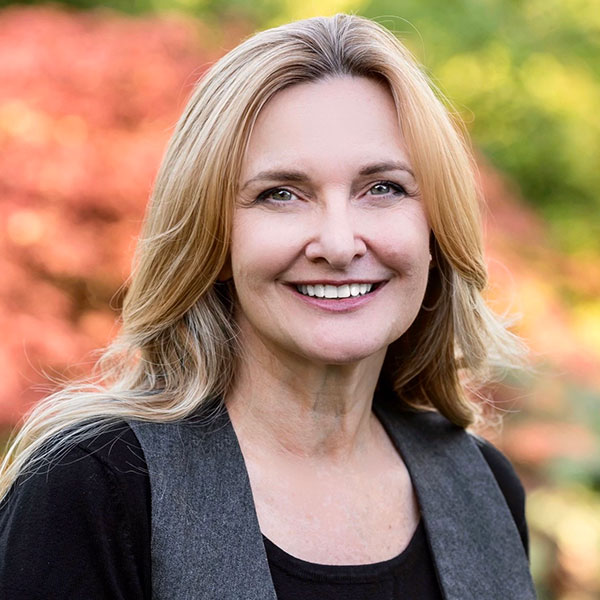 About the post author: Meg Grigal, Ph.D. is a senior research fellow at the Institute for Community Inclusion at University Massachusetts Boston and the co-director of Think College where, she serves as a principal investigator on a variety of research grants including the National Coordinating Center for the Transition Programs for Students with Intellectual Disabilities (TPSID) Model Demonstration Programs, the Think College Inclusive Higher Education Network, and Future Quest Island Explorations, a Stepping Up in Technology project. When not at work, Meg is a mom to a college junior (Go TERPs!!) and a high school senior (no idea where he’s going yet!!). She loves to garden, hike, and brew up cool concoctions with essential oils.