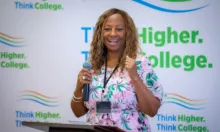
The website for the Think College public awareness campaign, “Think Higher.
Project
Inclusive Higher Education Network

The website for the Think College public awareness campaign, “Think Higher.
[Project: Think College Inclusive Higher Education Network] Leaders in HBCUs and postsecondary education gathered for the second HBCU IPSE Summit.
During this webinar, Angie Hoffman will share about the Supplemental Security Income (SSI) Work Incentives available to people with disabilities who are receiving Social Security Disability Benefits. It will also include information for Florida Postsecondary Comprehensive Transition Programs on how to help students and their families understand how people with disabilities can protect their benefits while working and connect to Work Incentive Planning Assistance. Participants will gain:
An understanding of the Social Security Disability Benefits,
The Institute on Community Integration (ICI) is currently leading a Community-Based Collaborative Transition Model project to improve the transition experiences and outcomes of Minnesota students with intellectual and developmental disabilities. The project intersects with MIHEC's inclusive higher education efforts to expand postsecondary education options for students with an intellectual disability. Renáta Tichá, Brian Abery, and Seunghee Lee will share the project goals, the project's preliminary findings, and the next steps.
Oklahoma currently has three Inclusive Post Secondary Education (IPSE) options for students with intellectual/developmental disabilities which are Comprehensive Transition and Postsecondary Programs (CTP designated) and one IPSE program for degree-seeking students with autism. The strategic partnerships that support students’ access to college and community employment are an essential component of the Oklahoma IPSE initiatives.
Students with intellectual disability are increasingly identifying college as a goal, but far too few have actually had the option. It’s been nearly 20 years since the first inclusive college programs began and still, just 2% of school-age students with intellectual disability are attending college. It’s time to change that! The “Think Higher.
The Think College Inclusive Higher Education Network's Career and Technical Education (CTE)Workgroup continues its work focused on increasing the quality and availability of postsecondary CTE opportunities for students with ID.
The Career & Technical Education (CTE) Workgroup has wrapped its work for this school year. Read about what they have done and what they have planned for next year.
[Project: Think College Inclusive Higher Education Network] The Great Lakes Inclusive Post-Secondary Education Alliance (GLIPSEA) held their first partner meeting to discuss planned activities and more.
Here is a story about Quintin Davis, a young adult achieving his career goals in the culinary field through participation in a postsecondary CTE program.