National Coordinating Center
This webpage was developed in response to the COVID-19 pandemic, in an effort to support educators in the move to online teaching and distance learning. Maria Paiewonsky and Lori Cooney produced this resource based on supported education model and universal design for learning (UDL). There are examples for how to support students and numerous technology resources, as well.
Project
National Coordinating Center
This publication draws from a qualitative study that interviewed college students with intellectual disability in an attempt to determine what is known about IPSE students and their experiences with peer supports. Inclusive postsecondary education (IPSE) programs for youth with intellectual disability recognize students with intellectual disability as contributing members of the broader campus community through academic engagement, career development, and social activities (Grigal & Papay, 2018; Jones et. al, 2015).
Project
National Coordinating Center
This practical guide includes strategies that work to support students with intellectual disability (ID) who are looking for employment opportunities. The strategies shared in this How to Think College publication were shared with the authors by staff and faculty at six different postsecondary programs for students with ID, and align with the Think College Standards for Inclusive Higher Education; a chart is included to show the alignment.
Project
National Coordinating Center
As students prepare for college, it’s key they learn to use technology for skills like organizing, planning, note-taking, and scheduling.
This webinar, hosted by KU Transition to Postsecondary Education (KU TPE), features a presentation by Meg Grigal and Clare Papay about how educators and families can better support students with ID/D to begin their college journey ready for success. Learn how to support high school students with ID/D cultivate foundational skills; access academic supports; and develop 21st century skills using technology for communication, navigation, and social connections.
Project
National Coordinating Center
Staff at the National Coordinating Center are aware that our diverse community is in need of a wide range of supports at this time.
In this webinar, Clare Papay and Cate Weir from Think College presented the process for programs to become approved as CTP programs.
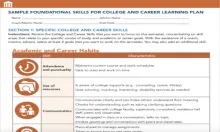
A tool and process to help students work on important non-academic college and career skills.
Who among us doesn’t have a tribe, or a village, or a network of friends and family that supports us? In good times and challenging ones, we use circles of support to help us out. The same goes for people with disabilities, only they are sometimes even more intentional in seeking out just the right people to be part of the Circle. In this webinar recording from March, 2020 a parent (Janice) and sibling (Emma) talk about how they have used Circles of Support with their son and brother, and how it’s also a model that has been used in schools and communities around the country.
Project
National Coordinating Center
This helpful and very timely list was created by Ariana Amaya, OTD, OTR/L at Integrated Studies at Gwynedd Mercy University and Halle King, OTD, OTR/R, at IDEAL at Lipscomb University in response to the drastic changes that happened in response to the COVID-19 pandemic. These two higher education professionals share simple yet critical tips for setting up a healthy learning environment at home, emphasizing things like the importance of maintaining a routine, having a designated workspace, and more.
Project
National Coordinating Center