Student Credentials

Programs for students with intellectual disability (ID) offer a range of credentials upon completion of programs of study. These credentials vary in their format and structure and the extent to which they are aligned with standard Institute of Higher Education (IHE) credential development. But in many cases, they represent the first credential available at these IHEs to this traditionally marginalized group of learners.

The IHE credential landscape generally is expanding rapidly to include online credentials, micro and nanodegrees, and non-degree credentials of value. Students, employers, researchers, policymakers, educators and advocates are considering the question: What are the characteristics of a "meaningful credential"? The resources on this page provide information and insights about credentials for students with ID, and also offer context about the credential landscape nationally.
News & Features

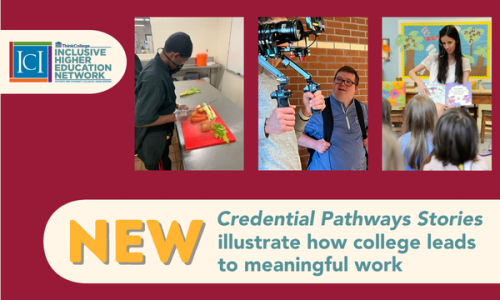
Think College is excited to share this publication series: Credential Pathways Stories. This series is designed to shine a spotlight on the transformative role that higher education can play in the lives of students with intellectual disability. ...Read more

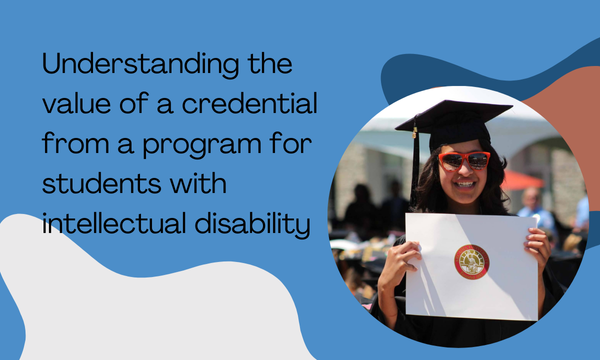
The value of a credential awarded by a college program for students with intellectual disability on a resume may not be clear to a potential employer—yet. ...Read more

This Florida IPSE Credential Guidance Brief Series was developed in 2019 by the Florida Consortium on Inclusive Higher Education (FCIHE) in collaboration with Community a ...Read more

Frequently Asked Questions

Can students with ID earn postsecondary credentials?

Yes! There are close to 300 college and university programs nationwide that serve students with ID and offer the opportunity to earn one or more credentials upon graduation. These programs offer a variety of credentials, most typically non-degree credentials such as a general certificate that can be tailored to individual students’ career goals. A growing number are offering certificates that focus on work in a particular industry. Students also sometimes go on to earn industry-recognized credentials and college degrees. 

How are credentials developed?

Many programs develop their own credential based on a program of study designed to include students with ID in academic, employment, and extracurricular activities. Others may offer credentials that are available to all students at the institution of higher education.

What factors are considered when programs develop credentials specifically for students with ID?

The definition of a postsecondary program for students with ID that is included in the Higher Education Act specifies that these programs must include college courses for credit or audit with students without disabilities, internships or other work-based learning activities, instruction in independent living skills and support for campus engagement. Programs take a variety of approaches in addressing each of these requirements in their program’s credential.

Are non-degree credentials valuable in today’s labor market?

Absolutely. Many jobs in today’s economy require postsecondary education, but this does not always mean a 4-year degree. It can also mean certificates, licenses, or industry certifications which lead to quality jobs.